
By Patrick Walsh · Holy Hammer Home Services · · Updated
Quick answer: My two biggest fall roof priorities for Houston homeowners are checking potential animal entry points and clearing pine needles, leaves, and debris from the roof’s drainage paths. I also check vents and exposed fasteners for maintenance needs before small openings become bigger problems.
Fall roof care does not have to start with a replacement discussion. Often, it starts with looking closely at the places where animals can get in and where water can no longer drain as intended.
As cooler weather approaches, I want homeowners to pay attention to those details. The photos below show real conditions I have encountered: an animal-chewed opening into an attic and a gutter with substantial debris accumulation.
1. Check roof returns and gaps that could allow animal entry
Animals looking for shelter can take advantage of vulnerable roof details. I pay particular attention to roof returns and places where a lower roof meets a wall or soffit. An opening in one of these areas can be difficult for a homeowner to see from the ground.
In the photo below, an animal had already chewed through the soffit and entered the attic. The hole and broken material are visible where the soffit meets the roof. This was an actual entry point, not simply a gap that might become a problem later.
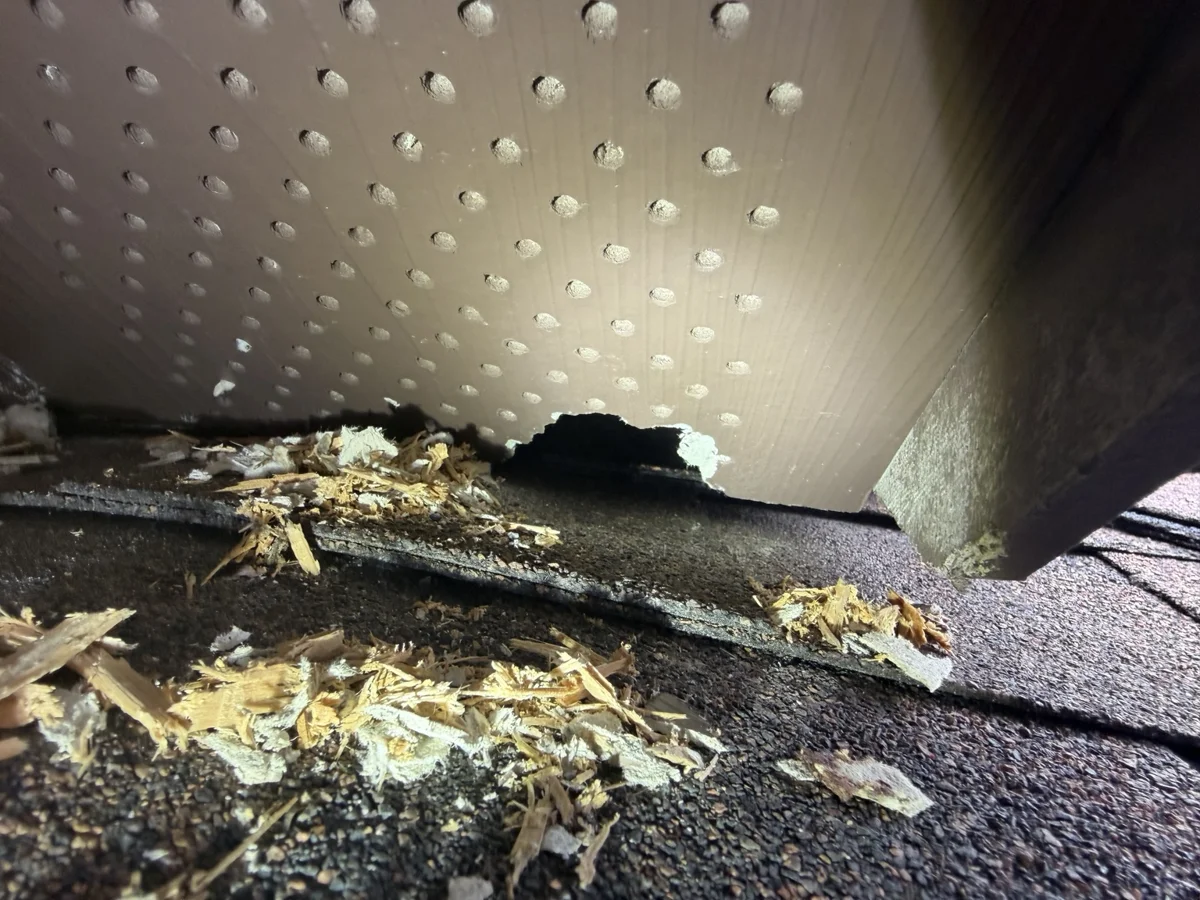
We install solid metal flashing beneath vulnerable roof returns and at other unintended roof-to-wall gaps that could allow animal entry. The goal is to close those routes with a durable detail while keeping the roof’s water-shedding function intact.
That work needs to distinguish an unintended gap from a designed ventilation or drainage opening. Covering soffit intake vents with solid metal would create a different problem. Repairs should preserve necessary airflow and drainage.
Closing one roof opening also is not a guarantee that the entire home is animal-proof. Other entry routes may exist. If animals are already inside, coordinate with a qualified pest or wildlife professional before closing the opening so they are not trapped in the attic. Cornell’s pest-exclusion guidance makes that same distinction.
2. Clear pine needles and leaves from roof valleys
A shingle roof relies on shedding water down its surface. Valleys—the channels where roof slopes meet—carry water from the adjoining slopes, so debris collected there deserves attention.
Pine needles and leaves can collect in these channels and form a barrier. That can hold moisture, restrict the intended flow, or divert water toward vulnerable details. The concern is not simply that water is moving slowly; it is that water may be backed up or redirected where the roof was not intended to carry it.
Keeping the roof clear helps those drainage paths do their job. When inspecting a debris-covered area, it also matters to check the roofing and flashing underneath rather than assuming removal of the debris is the only work needed.
3. Keep gutters and downspout outlets clear
The drainage path continues beyond the shingles. If the gutter is packed with leaves and pine needles, water reaching the roof edge may have nowhere to go as intended.
The photo below shows a concentration of leaves and needles in the gutter, along with finer material along its bottom. It is a clear example of why fall maintenance should include the drainage system, not just the visible roof surface.
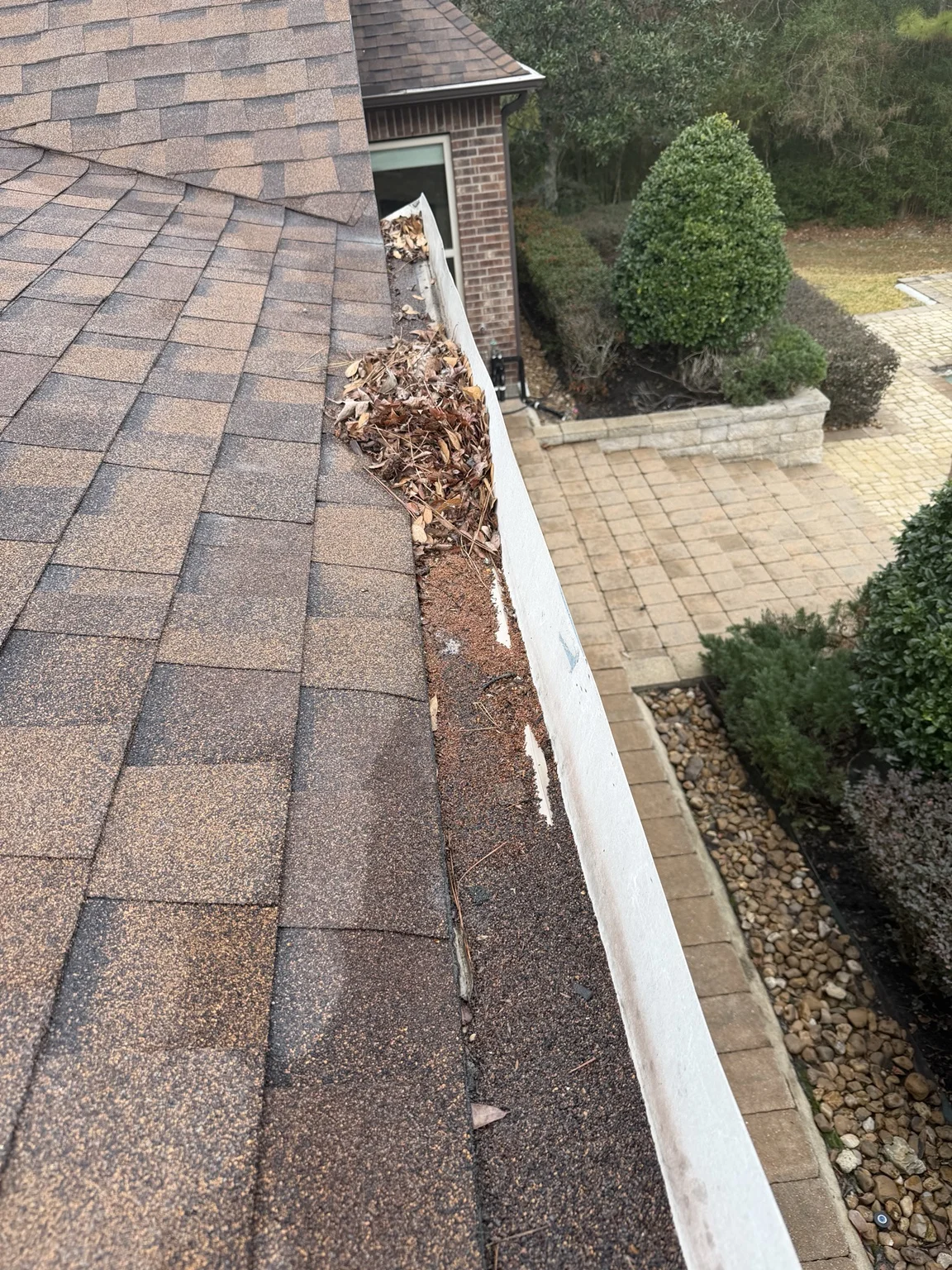
Blocked gutters can overflow or back water toward the roof edge. GAF’s roof-leak guidance notes that gutter clogs can direct water beneath shingles. Clearing debris helps reduce that risk, but an existing leak still needs its own diagnosis.
At Holy Hammer, gutter cleaning is available as part of a roof maintenance package. We do not offer gutter installation or gutter repair. If the gutter itself needs those services, it should be evaluated by an appropriate provider.
4. Inspect vents and exposed fasteners
Beyond animal entry and debris, my fall checks include the roof vents and exposed fasteners. I look for details that need attention so the roof is not heading into another stretch of rain with an avoidable opening.
That means checking the flashing, the condition of the accessory, and sealant where the installation requires it. A deteriorated seal around an exposed fastener may need maintenance; damaged flashing or a failed vent component may need a more specific repair.
“Sealing a vent” does not mean covering its ventilation openings. Those openings must remain functional. The repair needs to address the water-entry detail using materials and methods appropriate for the roof and accessory.
What can homeowners look for safely?
From the ground or another safe location, watch for visible debris piles, gutter overflow during rain, damaged soffit areas, or loose roof accessories. Indoors, take note of new ceiling stains or scratching sounds in the attic and tell the professional who inspects the home.
You do not need to climb onto the roof to collect useful information. Photos of interior staining, the timing of a leak, or the location of animal sounds can help guide an inspection. Leave roof access, debris removal at height, and animal handling to appropriately equipped professionals.
When should you schedule fall roof maintenance?
I would rather address a visible opening or blocked drainage path before it becomes an attic intrusion or an interior leak. If you already see damage, hear animals, or have an active leak, arrange an evaluation instead of waiting for a particular date on the calendar.
Homes with trees dropping needles and leaves onto the roof may need the drainage paths checked again after more debris falls. A cleaning is a snapshot of conditions, not a promise that the roof will stay clear for the rest of the season.
Your fall roof checklist
- Inspect vulnerable roof returns and roof-to-wall or soffit connections.
- Address confirmed animal activity before permanently closing entry routes.
- Clear pine needles and leaves from roof valleys and other collection points.
- Check gutters, outlets, and downspouts for obstruction.
- Inspect vent flashing and exposed fasteners for needed repairs or sealing.
- Document damage and investigate any existing leaks.
Start with the maintenance your roof needs
These checks are about protecting the roof you have and catching specific problems. Animal entry and debris blockage are my main fall priorities, with vent and fastener maintenance completing the inspection.
If you would like a fall roof evaluation in Greater Houston, contact me or learn more about our roof maintenance services. If water has already appeared inside, our guide to tracing a ceiling stain to its source explains how I approach leak diagnosis.
Patrick Walsh
Holy Hammer Home Services
No Pressure. Just Solutions.