
By Patrick Walsh · Holy Hammer Home Services · · Updated
Finding a water stain on your ceiling can make you wonder how serious the problem is—and whether you’re about to need a new roof.
In my experience, many roof leaks come from specific problems that can be repaired: a leaking nail, deteriorated sealant around a vent fastener, or a cracked plumbing vent boot. The important part is finding the actual source and checking the condition of the surrounding roof before deciding what work is needed.
At Holy Hammer Home Services, that investigation starts inside your home.
I start where you see the leak
When I arrive for a leak appointment, the first thing I want to see is the stain or leaking area on the drywall.
That gives me a starting point. From there, when the attic is safely accessible, I go inside and look for the corresponding area on the other side of the ceiling.
Sometimes the easiest way to locate it is to involve the homeowner. While I’m in the attic, I may ask them to gently tap the ceiling with a broom handle, provided the drywall is sound enough. That helps guide me to the right area.
It’s a simple part of the process, but it helps connect what the homeowner sees inside the room with what I’m investigating above it.
Following the evidence through the attic
Once I locate the affected area, I examine the roof decking above it and look for evidence that helps trace the source.
Around a roof vent, I may briefly turn off my flashlight to look for daylight through an unintended opening. I also look for staining, rusted fasteners, and deteriorated wood.
When a leak involves a nail holding the lower portion of a vent flashing, I sometimes find a rusted nail with damaged decking around it. Those findings help me narrow down where to inspect on the roof.
Each clue is part of the investigation. I want to connect the interior damage, the attic evidence, and the roof condition before recommending a repair.
Finding the same spot on the roof
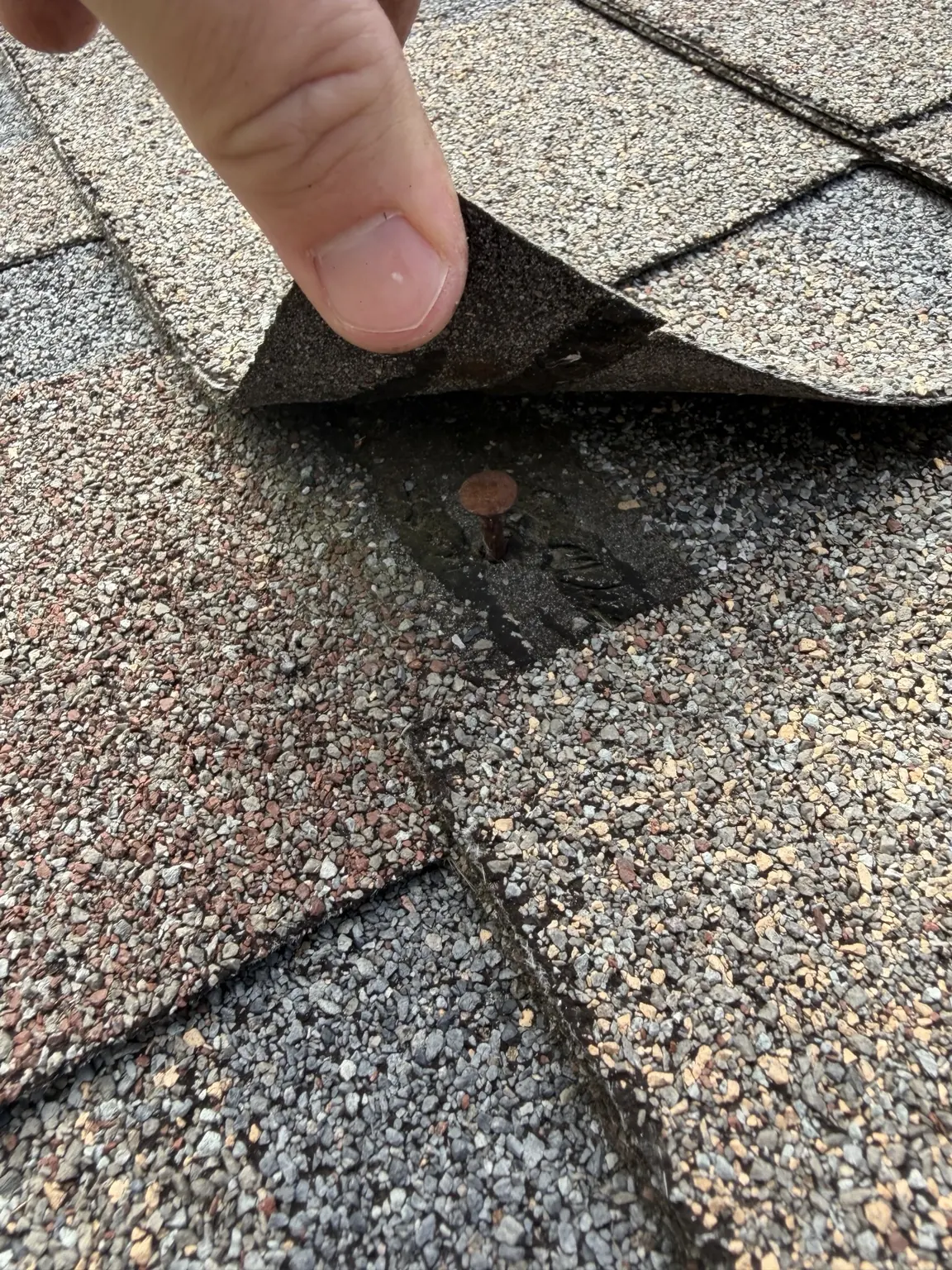
A small leak source can be difficult to locate from above, especially when the relevant nail is concealed beneath a shingle.
If I’ve traced the leak to a particular nail from inside the attic, I sometimes push that nail upward so I can identify the exact location when I get onto the roof. This is part of my professional inspection and repair process—not a completed repair.
It helps me find the spot without unnecessarily lifting surrounding shingles to search for it. Once on the roof, I inspect that location and determine what needs to be corrected.
Common leaks that can be repaired
The photos in this article show examples I’ve identified as repairable leaks during my inspections. They illustrate why finding a ceiling stain shouldn’t automatically lead to a recommendation for a new roof.
A nail through the shingle surface
A problem at a single fastener can be the focus of a localized repair. I inspect the nail location, the affected shingle, and the surrounding materials to determine the appropriate scope.
The goal is to correct the problem and account for any damage around it.
Deteriorated sealant around a vent fastener
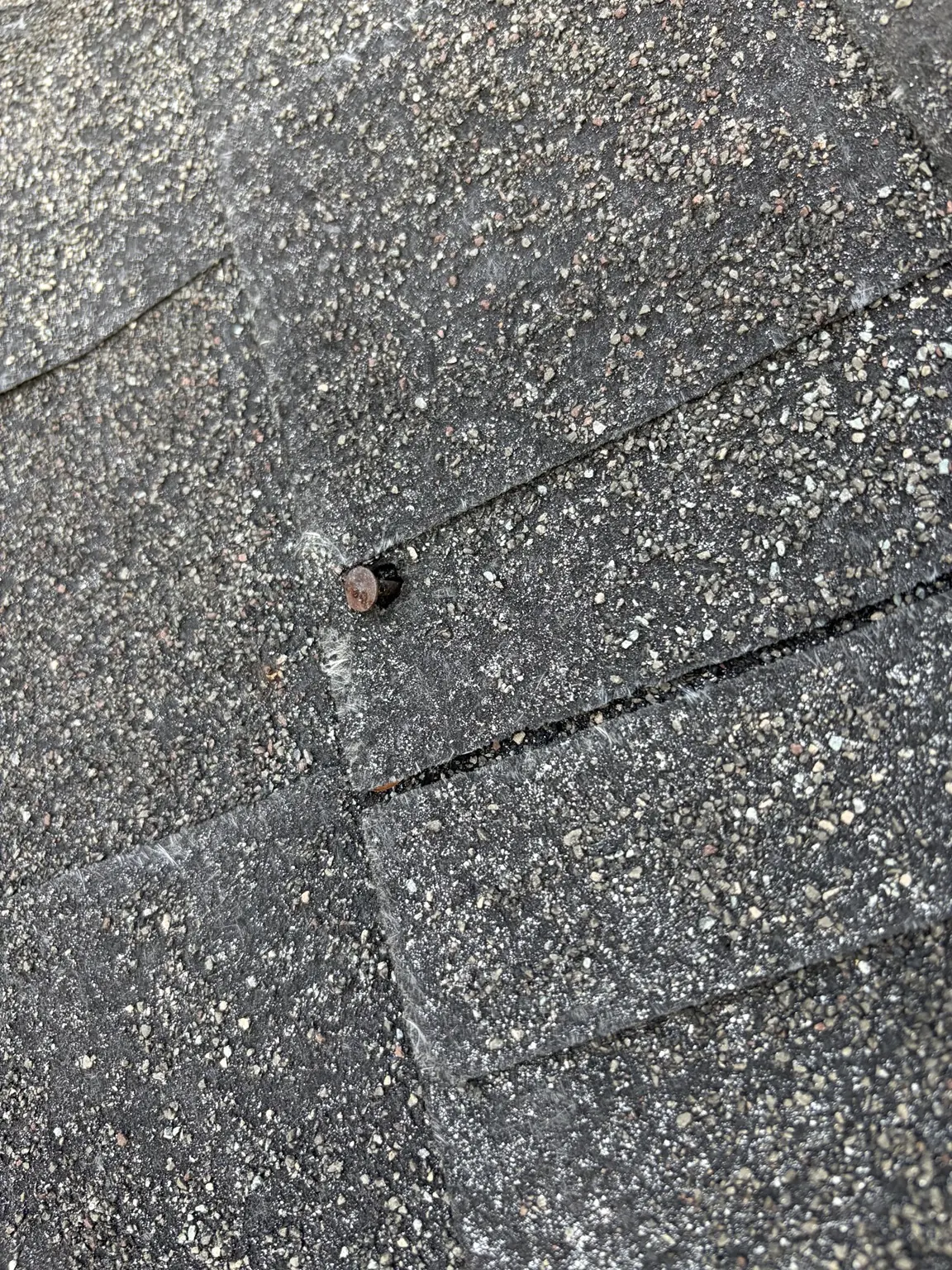
The second example shows deteriorated sealant around a fastener at the bottom of a vent flashing.
This is one of the details I examine when tracing a vent-related leak. I also check beneath the area when accessible, because the condition of the decking matters when planning the repair.
A small visible defect and the damage beneath it may require different amounts of work. That’s why I want to understand both before explaining the scope.
A cracked plumbing vent boot
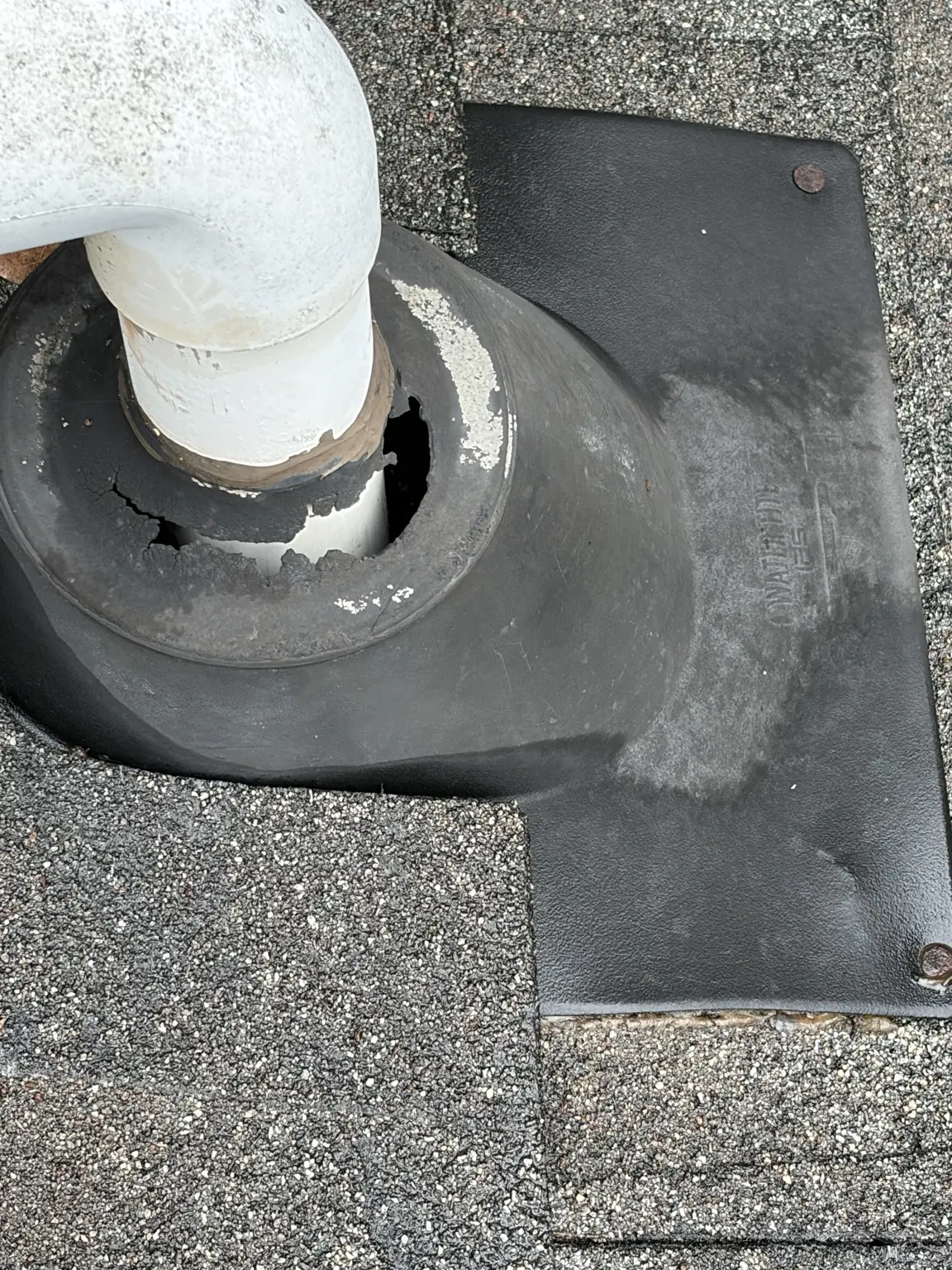
Another example is the deteriorated seal around a plumbing vent pipe. In this photo, the material around the pipe has cracked and separated, leaving a visible opening.
This was another repairable leak I found. The condition of one vent boot does not, by itself, establish that the whole roof needs replacement.
Repairability still depends on the surrounding roof
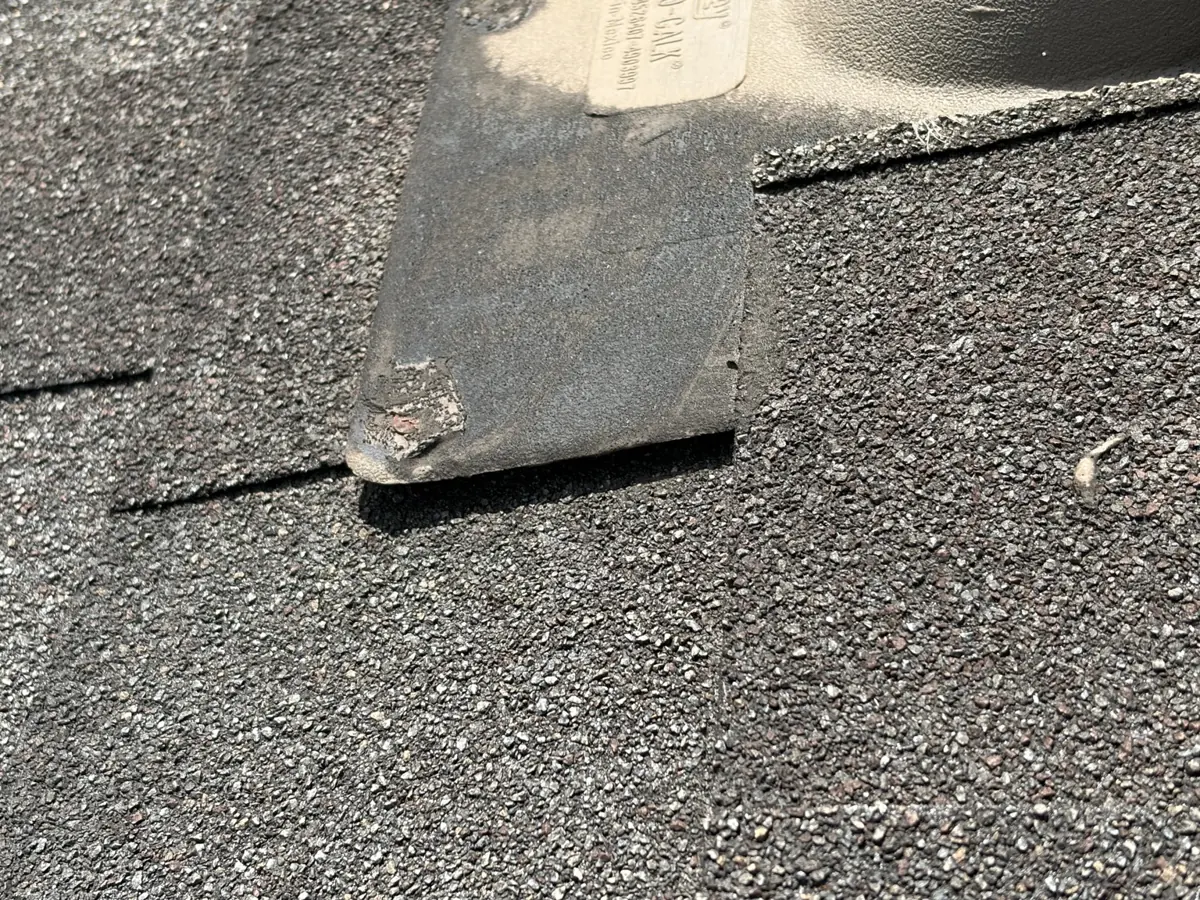
Finding a specific leak source is one part of the decision. I also need to consider whether the surrounding roofing can support a proper repair.
If the shingles are in serviceable condition and the problem is isolated, a repair may make sense. If the surrounding shingles are badly deteriorated or break when disturbed, that changes the conversation.
That’s the same condition-first approach I explain in our roof repair-or-replacement guide. I want the recommendation to fit the roof I’m inspecting.
You should be able to see what I found
I take photos throughout the inspection so I can explain the findings clearly when I’m finished.
You may never see the underside of your roof decking or the small fastener involved in a leak. Photos help connect those details to the stain you noticed inside your home.
My goal is for you to understand where the leak is coming from, what condition I found around it, and what work I recommend. You should have an opportunity to ask questions before deciding how to proceed.
Start with an inspection, not an assumption
A ceiling stain deserves attention, but it isn’t a diagnosis of your entire roof.
At Holy Hammer Home Services, I start by investigating the problem, documenting the evidence, and explaining your options. When a repair makes sense, that’s a conversation worth having.
If you’re in Houston, Cypress, Tomball, Magnolia, or the surrounding northwest Houston communities, contact Holy Hammer Home Services to discuss your leak and schedule an inspection.
No Pressure. Just Solutions.