
By Patrick Walsh · Holy Hammer Home Services · · Updated
A roof leak doesn’t automatically mean you need a new roof. But replacing a few shingles isn’t always a lasting solution, either.
When homeowners ask me whether their roof can be repaired, I start with the condition of the shingles. I look at how much protective granule coverage remains, whether the shingles are still sealed, and—most importantly—whether I can complete a proper repair without breaking the surrounding shingles.
At Holy Hammer Home Services, our approach is repairs first when the roof’s condition supports it. That also means being honest when deterioration makes a dependable repair impractical.
What does severe granule loss look like?
Asphalt shingles have a protective surface of granules. As that surface wears away, the underlying material becomes exposed. Extensive loss that exposes the fiberglass matting is one of the signs I look for when assessing whether shingles are nearing the end of their serviceable life.
There’s a difference between an isolated worn spot and deterioration spread across a large portion of the roof. I want to understand whether we’re dealing with a localized problem or an overall condition that replacing a handful of shingles won’t address.
The accompanying inspection photo shows the widespread granule loss I documented across a roof slope. It gives homeowners a useful view of what extensive surface wear can look like.
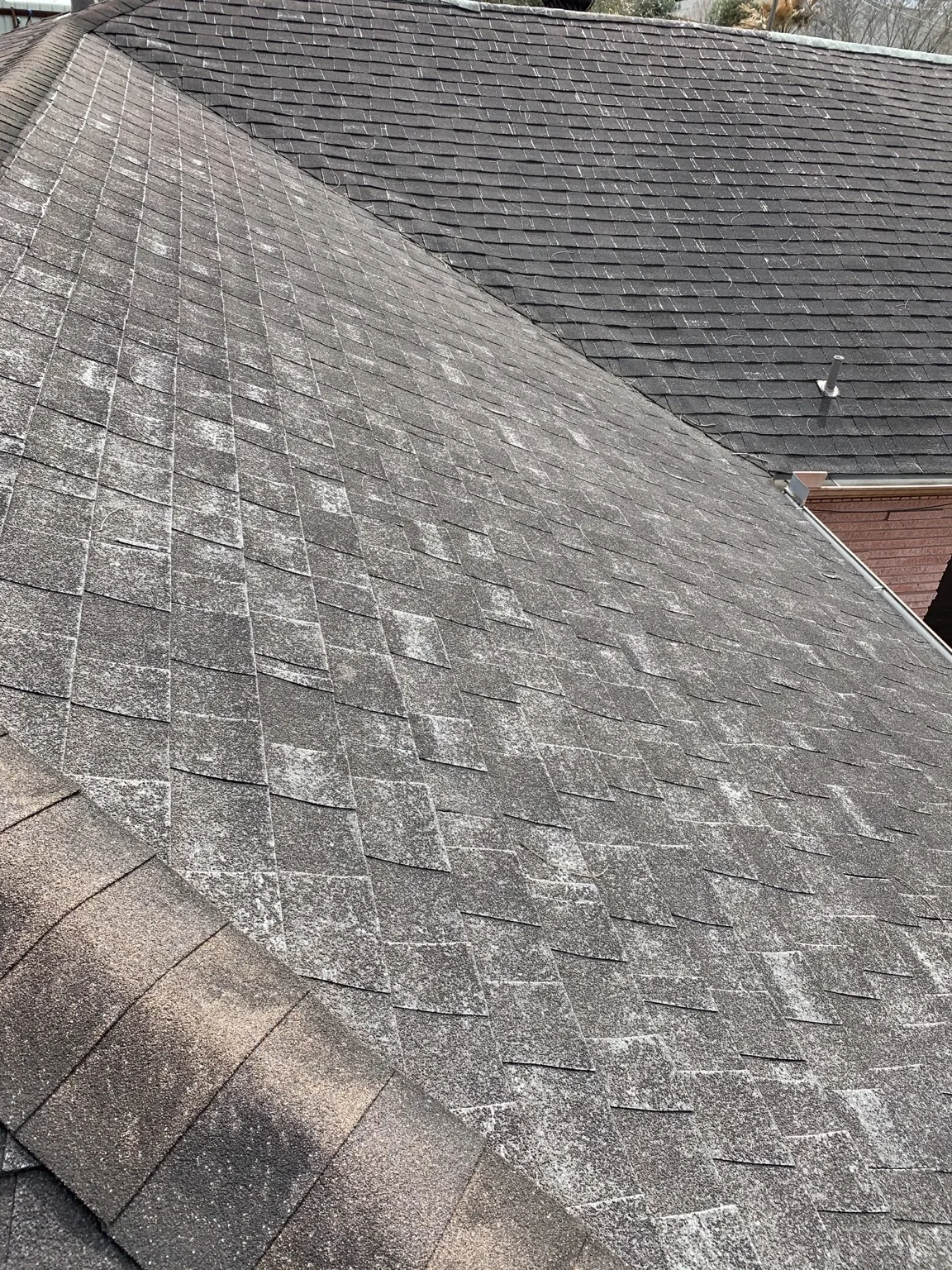
A photo helps explain the condition, but it doesn’t answer every question. I still need to inspect the shingles themselves before recommending repair or replacement.
Are the shingles still sealed?
Another thing I check is whether the shingles remain sealed to the shingles below them.
During an inspection, I look for shingles that have lifted or lost their seal, and I examine the condition of the fastening area underneath. An unsealed shingle deserves attention, but I don’t use that observation alone to decide that an entire roof needs replacement.
The bigger question is how that finding fits with everything else: the remaining granule coverage, the flexibility of the shingles, and how widespread the deterioration is.
Why brittle shingles can make a small repair much bigger
Brittleness is often the deciding factor in whether I can make a proper shingle repair.
Replacing a shingle involves more than pulling out the visibly damaged piece. I have to carefully release the surrounding shingles and access the nails holding the damaged shingle in place. That work can require lifting shingles in the courses above the repair.
If those shingles are still flexible enough to work with, a localized repair may be practical. If they crack or break as they’re lifted, the repair area starts expanding.
I describe it to homeowners like pulling a thread on a shirt: you start with one small spot, but it keeps going.
You remove one damaged shingle, and the next one breaks. Then another breaks while you’re trying to replace that one. What looked like a small repair becomes a much larger problem because the surrounding material can no longer tolerate the work.
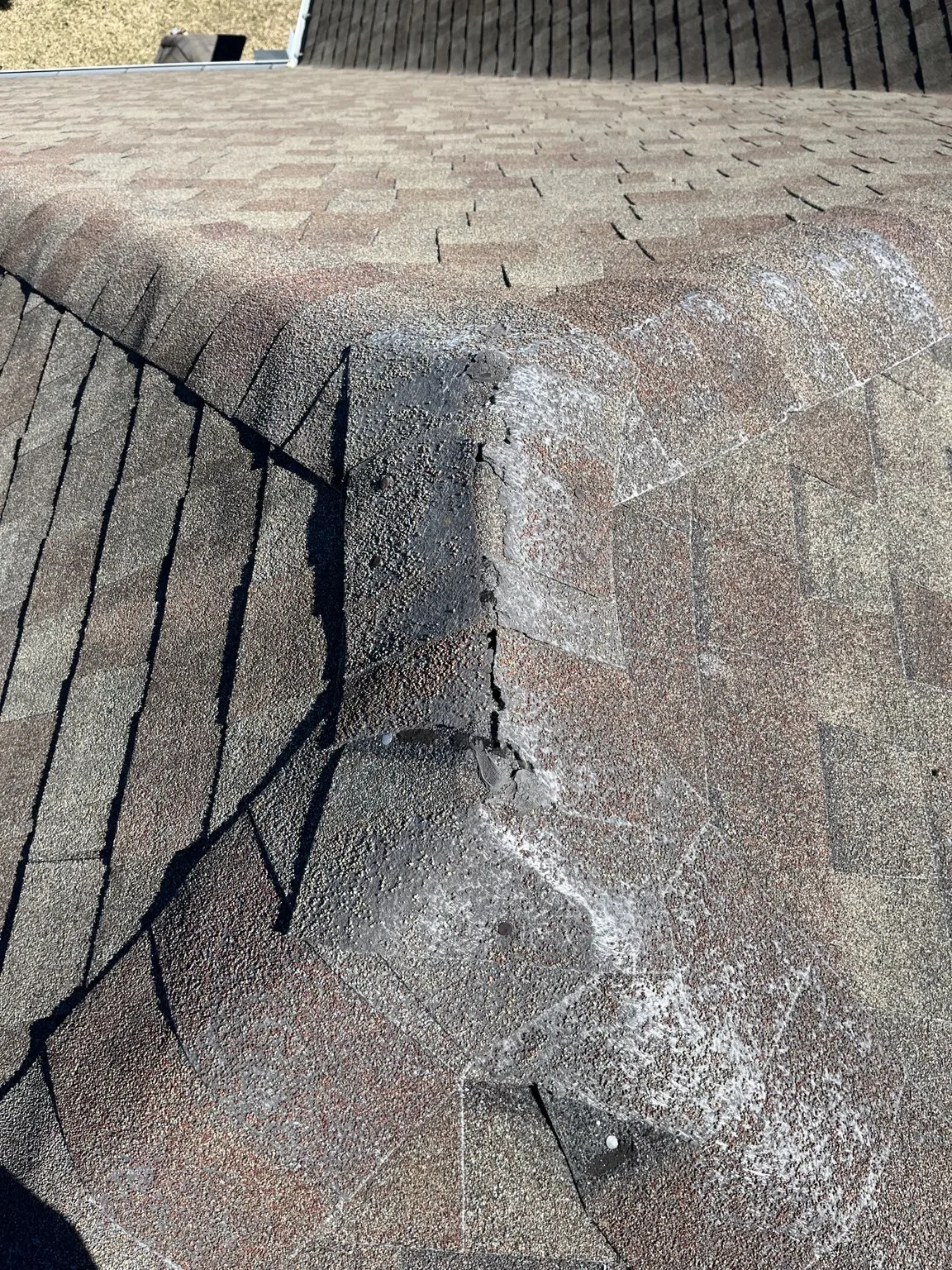
That’s why I consider repairability—not just the number of visibly damaged shingles—before recommending a solution.
When does a roof repair make sense?
A repair can be a good option when the problem is localized and the surrounding roof is still in serviceable condition.
For example, I may find a specific leak source or a limited area of damaged shingles while the rest of the roof remains suitable for continued use. In that situation, the goal is to address the cause and explain what the homeowner should monitor afterward.
Before recommending a repair, I want to be able to answer three questions:
- Can I identify and address the actual problem?
- Can I complete the work without causing damage that keeps spreading?
- Does the condition of the surrounding roof support the repair?
A repairs-first approach means looking for a reasonable solution that fits the roof in front of us.
When is replacement the more practical choice?
Replacement becomes a stronger consideration when deterioration is widespread and the shingles can no longer be worked on without breaking.
Extensive granule loss, exposed fiberglass matting, loss of sealing, and brittle shingles help build that picture. The extent matters, too: a problem affecting one area needs a different evaluation from a condition found throughout the roof.
My responsibility is to explain what I found and why it affects your options. If a repair is practical, I’ll explain the scope. If I believe it would leave you chasing one deteriorated area after another, I’ll explain that as well.
Get an explanation you can understand
You shouldn’t have to make a roof decision based only on its age or someone telling you, “It’s time.”
At Holy Hammer Home Services, we inspect the condition, document our findings with photos, and walk you through the options. Our goal is to help you understand what can be repaired, what may need replacement, and what led us to that recommendation.
If you’re in Houston, Cypress, Tomball, Magnolia, or the surrounding northwest Houston communities, contact Holy Hammer Home Services to schedule a roof inspection.