
New construction roofing.
Built around your build.
Pre-flashing, dry-in, roof installation, and clear coordination for custom home builders and general contractors across Greater Houston.
Roofing should fit the build sequence.
A custom home takes more than a crew that can lay shingles. It takes a roofing partner who understands what needs to happen before brick, stone, stucco, siding, and other finishes cover the details.
Holy Hammer works with builders to review the plans, understand the roof’s complexity, and coordinate the work with the jobsite schedule. We discuss the details early so the roofing scope supports the rest of the home.
Discuss your building plans ↗For builders, GCs, and custom home projects
- Plan review and a clearly defined roofing scope
- Pre-flashing coordinated with exterior trades
- Architectural shingles and standing seam metal
- Complex rooflines, walls, chimneys, and penetrations
- Scheduling updates and progress photographs
Talk directly with Patrick about the project location, target dates, material preferences, and the details that need attention.
Pre-flash first. Plan the water path.
Pre-flashing means addressing critical flashing details at the appropriate stage of construction, while the necessary areas are still accessible. The exact sequence depends on the wall assembly, roof system, and architectural details.
Roof-to-wall intersections, chimneys, dormers, and changes in roof elevation deserve early discussion. Once masonry, stucco, or siding closes an area, correcting a missed detail can become far more invasive.
We coordinate the roofing portion of these transitions with the GC and the trades responsible for adjacent materials. The goal is a continuous water-management approach, rather than treating each trade’s work as an isolated surface.
What we coordinate before exterior finishes
- Locations where roofing meets brick, stone, stucco, or siding
- Flashing interfaces with the wall’s water-resistive barrier
- Step flashing, counterflashing, and other specified transition details
- Chimney and penetration details within the agreed roof scope
- Areas that need photographs or review before they are concealed
Sealant may be required within a specified assembly. It should not replace a properly planned flashing detail. We review the project-specific details instead of assuming a bead of caulk will solve every transition.
The work you want to see before it is covered.
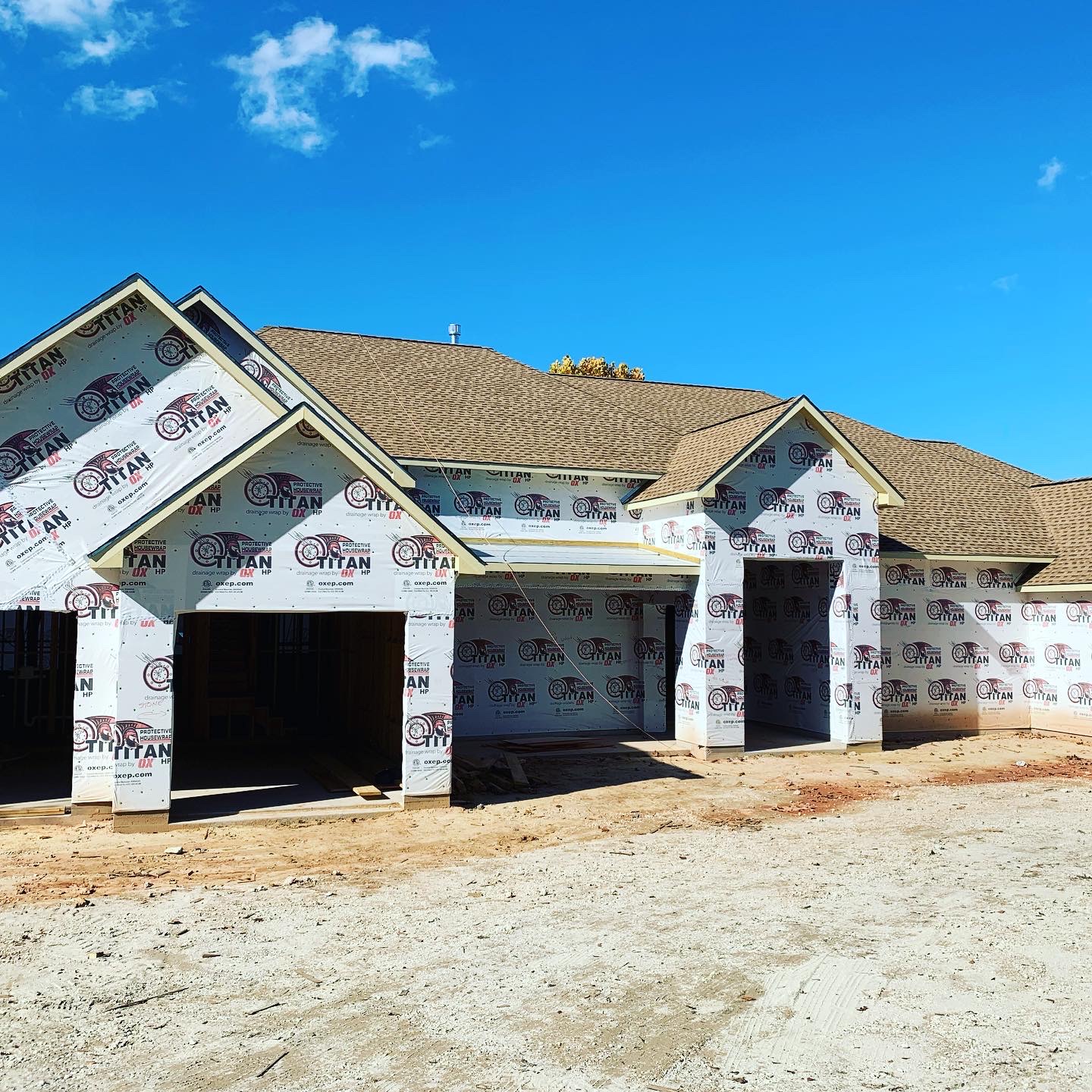
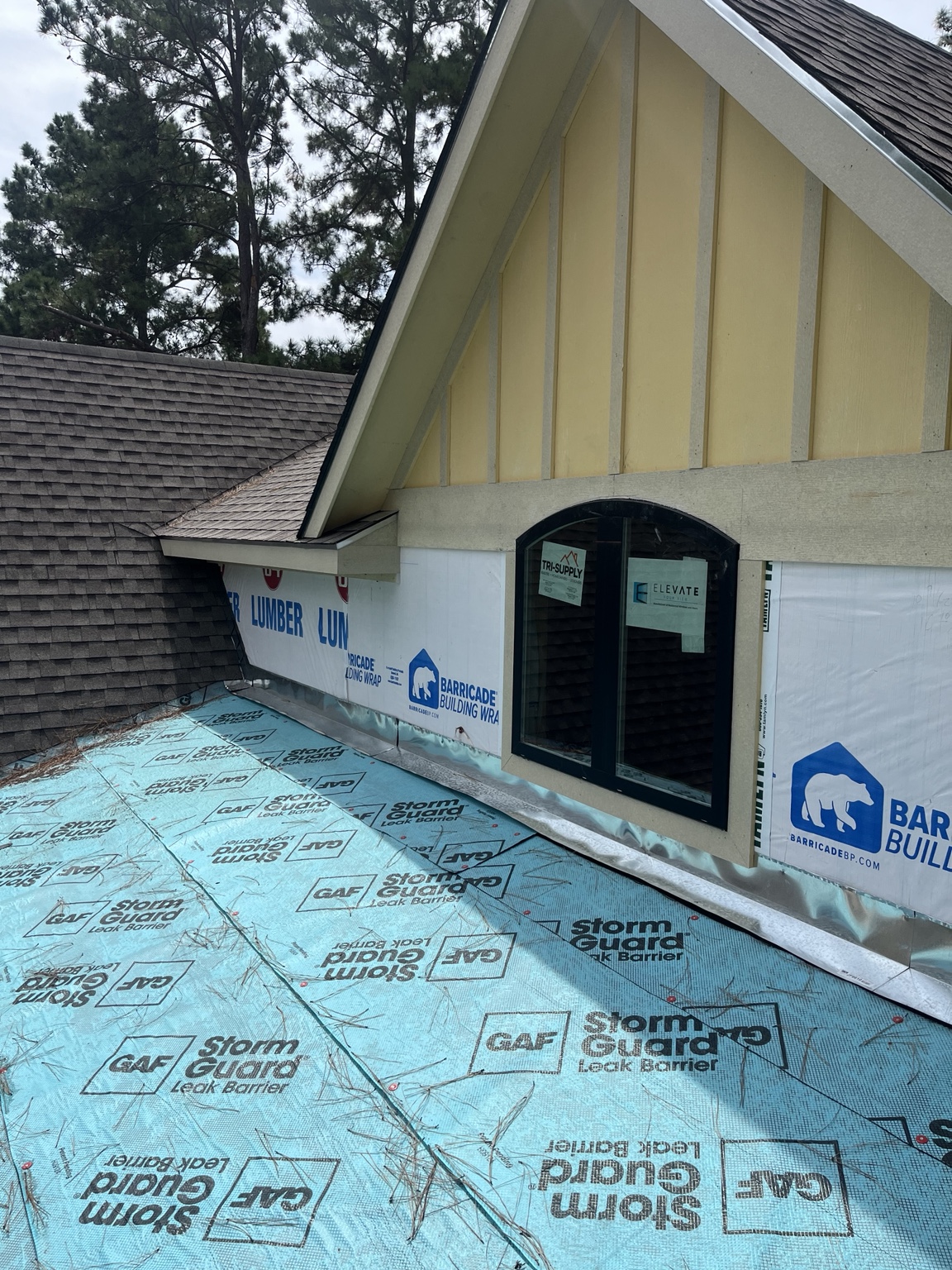
A roofing sequence you can plan around.
Review the plans
We discuss roof geometry, slopes, material choices, wall intersections, penetrations, and access. Architectural plans and roof elevations help us identify questions before pricing and mobilization.
Define the scope
We clarify materials, underlayment, flashing, ventilation, and accessories, along with exclusions and responsibilities between trades. Material changes and design revisions are discussed before proceeding.
Coordinate pre-flashing
We identify the roof-related details that need to be addressed before adjacent exterior work makes them difficult to access. The GC and relevant trades help establish the required sequence.
Plan dry-in and installation
We coordinate the agreed roof dry-in and finish-roofing stages around framing readiness, deck condition, penetrations, material availability, and weather. A dry-in stage does not mean an unfinished home is fully weatherproof.
Communicate during the work
If site conditions, framing, or another trade’s work affect the roof, we raise the issue and discuss the next step. Photos document important details as the work progresses.
Review and close out
We review the completed roofing scope, discuss any outstanding items, and provide applicable product and workmanship information. Follow-on trades should coordinate any later roof penetrations or changes.
Tell us the milestone.
We’ll discuss what needs to be ready.
A proposed roofing date should be connected to the site’s actual readiness. Before mobilizing, we discuss framing and decking progress, roof openings, material selections, access, and any details awaiting a decision.
We coordinate with your GC on pre-flashing, dry-in, and roof installation so the sequence is clear. Let us know when framing dates or exterior-trade schedules change; an early update helps us adjust the plan.
Questions we settle together
- When will the roof deck and relevant wall areas be ready?
- Which penetrations or curbs need to be established before roofing?
- Which exterior trades depend on pre-flashing being complete?
- Where can materials be delivered, staged, and accessed safely?
- Who approves changes, and who receives progress updates?
Roof size, pitch, complexity, material, weather, and jobsite conditions affect duration. We discuss a project-specific timeline rather than promising one fixed installation time for every custom home.
The roof should fit the architecture and the budget.
Architectural shingles
We discuss shingle choices, including Atlas products, alongside the home’s style, project budget, and applicable product requirements. Starter, ridge cap, underlayment, flashing, and ventilation belong in the conversation with the field shingles.
Value engineering starts with understanding which choices affect appearance, installation, and long-term serviceability. A lower price is only useful when everyone understands what changed in the scope.
Standing seam metal
Standing seam can suit contemporary, traditional, and modern farmhouse designs. Panel profile, material, finish, roof slope, transitions, and penetrations need careful coordination.
We discuss the proposed assembly and the details around chimneys, skylights, walls, and valleys. Performance and warranty terms depend on the specified products and installation; no roof is immune to every storm.
Explore standing seam roofing ↗Listen. Observe. Add value. Execute.
Listen: Understand the plans, timeline, budget, and expectations of the builder and homeowner.
Observe: Review roof complexity, jobsite conditions, and interfaces with the rest of the building envelope.
Add value: Explain material options, flag sequencing questions, and discuss flashing details before they are covered.
Execute: Work to the agreed scope, communicate changes, and document the roofing details as the project progresses.
Before we get started.
When should we involve Holy Hammer?
Ideally during planning and pricing, before the roof and exterior details are locked in. Early involvement gives us time to review materials, pre-flashing needs, and the sequence with other trades.
Can you pre-flash before brick, stone, stucco, or siding?
Yes. We coordinate the roofing-related pre-flashing scope with the GC and adjacent trades. The specific timing and detail depend on the project’s roof and wall assemblies.
Can you work around our framing and exterior-trade schedule?
We coordinate the roofing milestones with your GC and discuss readiness before mobilization. Keep us informed of changes so the plan can be adjusted around site conditions, materials, and weather.
Do you provide photo documentation?
We document roofing work as it progresses, particularly details that will become difficult to see later. Discuss any specific closeout or documentation requirements when defining the scope.
What do you need to prepare a proposal?
Send the project location, plans and roof elevations, intended material or finish, expected framing and roofing dates, and the GC’s contact information. Include unusual transitions, skylights, or other details you want reviewed.
What warranties are included?
We identify the applicable manufacturer material warranty and the agreed workmanship coverage for the proposed roof. Ask for the written terms, limitations, and any registration requirements for your project.
Send the plans.
Start the conversation.
Use our contact form to share your project location, target schedule, and material preferences. Patrick can coordinate a plan review with you. We’ll discuss the roof, the sequence, and what needs to be included in the proposal.
Contact Patrick about your project ↗Patrick Walsh · Holy Hammer Home Services
713.979.7663
patrick@holyhammerhtx.com
Custom home roofing in Greater Houston and surrounding areas. No Pressure. Just Solutions.